Navigation überspringen
  • Highlights

The Sound of Music and the five treasures: In the Footsteps of a Film Classic

Sound of Music Möchsberg

A view straight out of a movie

Few other films have shaped the world’s image of Salzburg quite like The Sound of Music. More than 60 years after its premiere, it still draws hundreds of thousands of visitors from around the world to the city of Mozart and the Salzkammergut every year, eager to experience the original locations of the Hollywood classic for themselves. Many of these places have one thing in common: They are found where the five treasures of Salzburg AG Tourismus GmbH continue to take guests to some of the most beautiful views, historic landmarks and unforgettable natural attractions in the region.

A film that made Salzburg world-famous

When The Sound of Music, starring Julie Andrews and Christopher Plummer, arrived in cinemas in 1965, few could have imagined that it would become one of the most successful movie musicals of all time. The story of the singing von Trapp family, famously based on true events, won five Oscars and turned Salzburg almost overnight into a dream destination for millions of people. To this day, more than 300,000 fans visit the film’s original shooting locations every year.

Interestingly, however, the film never achieved the same cult status in German-speaking countries. The reason may lie a few years earlier: Back in 1956, the German feature film Die Trapp-Familie, starring Ruth Leuwerik and Hans Holt, had already told the story of the von Trapp family – and proved a huge hit with audiences. So when Hollywood retold the story almost ten years later, many people here were already thoroughly familiar with it. Internationally, on the other hand, The Sound of Music became a phenomenon that continues to captivate generations to this day.

Anyone traveling through Salzburg and the Salzkammergut today will discover many of the locations featured in The Sound of Music almost exactly as they appeared in the film. And that is also what Salzburg AG Tourismus’ “5 Treasures” are all about: They combine some of the places that made the film world-famous with unique experiences for visitors today.

Up to the most famous view in the film: in the MönchsbergAufzug lift

Then as now, one thing above all makes this spot so special: the incomparable view of the Old Town, Hohensalzburg Fortress and the surrounding mountains. Today, anyone who wants to experience the view for themselves can simply take the MönchsbergAufzug lift –the quickest way to one of Salzburg’s most beautiful panoramas. In less than a minute, visitors are whisked straight up to the Mönchsberg and a place where movie history was made.

Probably one of the best-known scenes from The Sound of Music was filmed high above the rooftops of Salzburg. As they sing “Do-Re-Mi,” Maria and the von Trapp children dance across a panoramic terrace on the Mönchsberg before the camera sweeps across the Baroque Old Town. The view extends as far as Nonnberg Abbey, where the shy Maria of the film initially lives among the nuns and where the real Maria married her baron. From that panoramic terrace, you can of course also see the roof of the Felsenreitschule, where the von Trapps perform “Edelweiss” before fleeing the Nazis. The shot from the panoramic terrace on the Mönchsberg remains one of the film’s most iconic images

Hohensalzburg Fortress – Salzburg’s eternal leading lady

A ride on the FestungsBahn Funicular up to the fortress offers more than the chance to experience one of Europe’s most important castles. It also reveals the very cityscape that millions of moviegoers around the world associate with The Sound of Music. Some landmarks simply never grow old.

Although the FestungsBahn Funicular itself does not make an appearance in the film, Hohensalzburg Fortress can be spotted time and again in the many views of the city. Needless to say, it dominates Salzburg’s skyline just as impressively today as it did during filming back in the mid-1960s.

Hollywood and the SchafbergBahn: A charming movie moment

Schafbergbahn am Weg auf den Gipfel des Schafberges im Sommer am 19.07.2025.
Anyone who actually rides the SchafbergBahn today experiences something the film merely hints at: a spectacular journey up one of Austria’s most scenic mountains, with views across the lakes of the Salzkammergut that have captivated visitors for generations.

The SchafbergBahn also has its own brief appearance in the Hollywood blockbuster – if only for a few seconds, when Maria and the children ride the historic cog railway together. In the very next scene, however, they suddenly get off the train in Werfen. A classic Hollywood trick: In reality, the two locations are more than 40 kilometers apart. For the purposes of the edit, however, that hardly mattered. This little piece of cinematic license – and eagle-eyed viewers can spot several more throughout the film – still brings a smile to fans’ faces today.

From Lake Wolfgangsee to the film’s famous wedding

One of the most emotional scenes in The Sound of Music may not take place on Lake Wolfgangsee itself, but it was filmed very close by. For the wedding of Maria and Georg von Trapp, the filmmakers chose the magnificent Basilica of St. Michael in Mondsee – whilst the real-life couple were actually married in 1927 at Nonnberg Abbey Church in Salzburg. The church in Mondsee remains one of the film’s most visited locations to this day. It is just a short trip from St. Wolfgang and can easily be combined with an excursion aboard the WolfgangseeSchifffahrt Ferries. A journey across the lake thus becomes a journey through the landscape that made The Sound of Music famous around the world.

A journey back in time that continues to captivate

More than six decades after filming, one remarkable thing has remained virtually unchanged: The story of The Sound of Music is told not through specially constructed movie sets, but by real places. The fortress above the Old Town, the view from the Mönchsberg, the historic SchafbergBahn and the unique lake scenery of the Salzkammergut can still be experienced today much as they appeared in the film. And that is precisely what makes the Five Treasures so special. They not only take visitors to some of the most beautiful excursion destinations in Salzburg and the Salzkammergut – they also open a window onto the world of a movie that has captivated generations of people and continues to connect Salzburg with the rest of the world in a truly unique way.det.

For this blog post, we spoke with Dieter Winkler, a member of the FestungsBahn team whose many years of experience as a Drivers Guide and countless private Sound of Music tours have given him a wealth of knowledge about the original filming locations, behind-the-scenes stories and historical facts.

You might also like

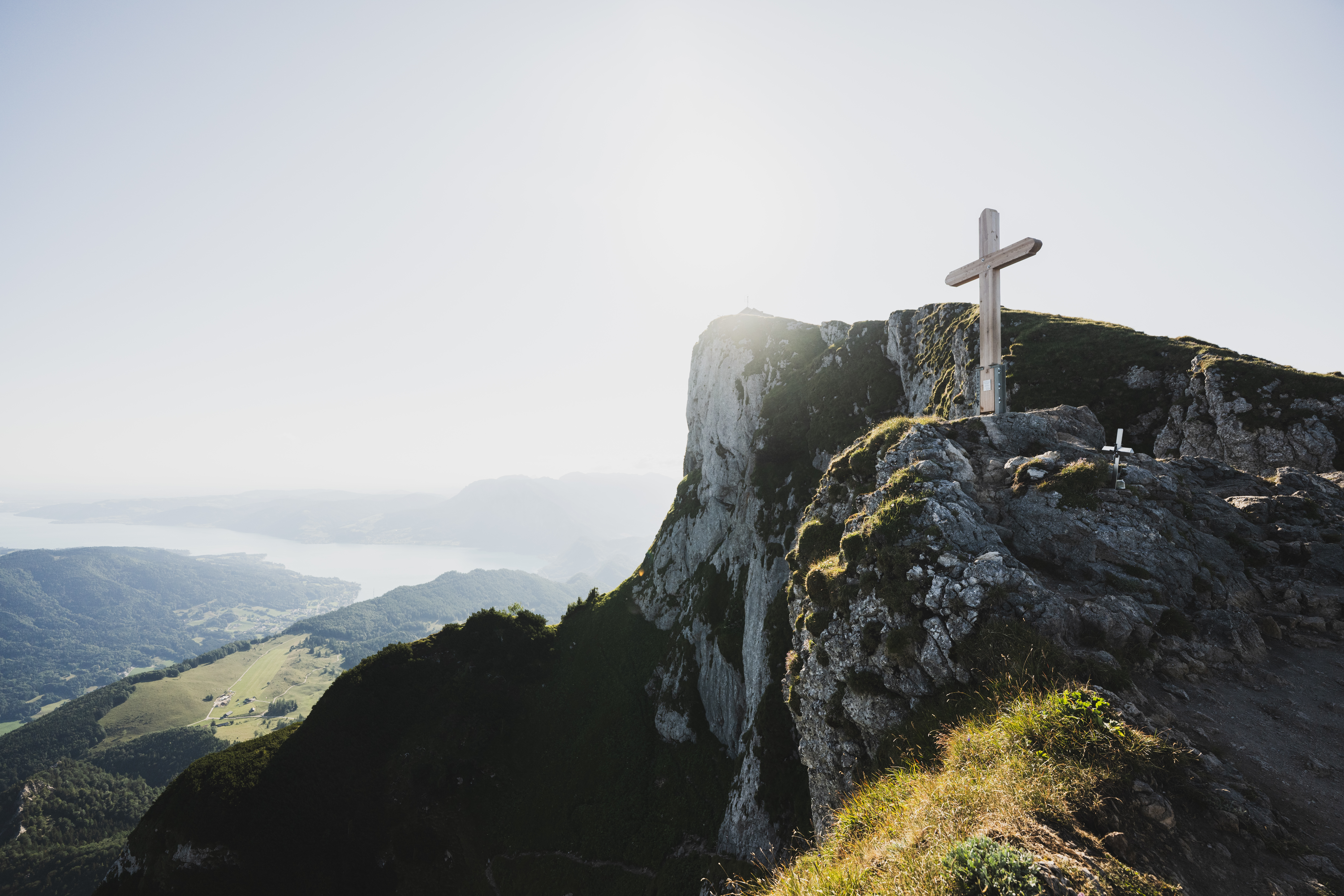
New Summit Cross milestones New Summit Cross for the Schafberg After 40 years, the weathered summit cross on the Schafberg has been replaced. With the aid of the SchafbergBahn, the Mondsee chapter of the Austrian Alpine Club safely transported the new landmark to the summit. The result is a new summit cross that will welcome visitors to the Schafberg for many decades to come. Stories from Lake Wolfgangsee: history Stories from Lake Wolfgangsee: Summer Getaways, Sensations & Curious Tales Anyone wanting to discover the history – and the tales – of Wolfgangsee is in the best of hands with Augustin Kloiber, the town historian of St. Gilgen. Visitors have to climb to the attic of the village's former schoolhouse to meet him. On the way up, the old wooden floor creaks with every step you take, giving you a clear sense of what it must have sounded like here whenever generations of schoolchildren ran across those same floorboards once the bell rang for recess. In 30 seconds through the history of Salzburg: history In 30 seconds through the history of Salzburg: The MönchsbergAufzug lift The MönchsbergAufzug lift is one of the “Five Treasures” of Salzburg AG Tourismus GmbH – and far more than simply the quickest way up the Mönchsberg. Since 1890, it has connected Salzburg’s Old Town with a place where nature, architecture, culture and the city’s history come together in a unique way. A ride lasting just 30 seconds takes passengers through more than 135 years of history. When Muscle Power Makes Waves: highlights When Muscle Power Makes Waves: World Record on Lake Wolfgangsee The waters of Lake Wolfgangsee lie calm. The evening sun is reflected upon the water. But then the tension begins to build. Hundreds of eyes are fixed on two boats – members of the WolfgangseeSchifffahrt fleet. Between them: one man, one rope – and a moment that will be remembered. When – on May 13, 2026 – Franz Müllner succeeds in setting the two passenger vessels in motion using nothing but his own muscle power, a murmur runs through the crowd. A few seconds later, it’s clear: the Salzburg strongman has done it – he’s set a new world record! Between Schafberg and Lake Wolfgangsee: people Between Schafberg and Lake Wolfgangsee: Where Dream Jobs are found When Erik Haas drives to work in the morning, it takes him just a few minutes to get there. No traffic. No stress. Instead: mountains, the lake, and a workplace many people marvel at enviously. "They often tell us, 'You have such a great job in such a beautiful spot,'" the captain and locomotive engineer says with a laugh. And they're right. Anyone who works between the Schafberg and Lake Wolfgang gets to experience, every single day, a setting that most people only know from their vacations. Behind the scenes of the FestungsBahn: technology Behind the scenes of the FestungsBahn: The overhaul of a historic funicular Every year, the FestungsBahn funicular carries around 2.3 million passengers up to Hohensalzburg Fortress - arguably Salzburg's best-known tourism attraction – in just under a minute. To ensure that every ride is safe and runs smoothly, a precisely coordinated interplay of technology, experienced personnel, and regular inspections takes place behind the scenes. Gabriel Schmalzl, Operations Manager for the FestungsBahn, offers us insights into an area that remains invisible to most visitors, yet is all the more important, and explains what is involved in the general inspection process.