Navigation überspringen
  • history

In 30 seconds through the history of Salzburg: The MönchsbergAufzug lift

The MönchsbergAufzug lift is one of the “Five Treasures” of Salzburg AG Tourismus GmbH – and far more than simply the quickest way up the Mönchsberg. Since 1890, it has connected Salzburg’s Old Town with a place where nature, architecture, culture and the city’s history come together in a unique way. A ride lasting just 30 seconds takes passengers through more than 135 years of history.

High above the rooftops of the city

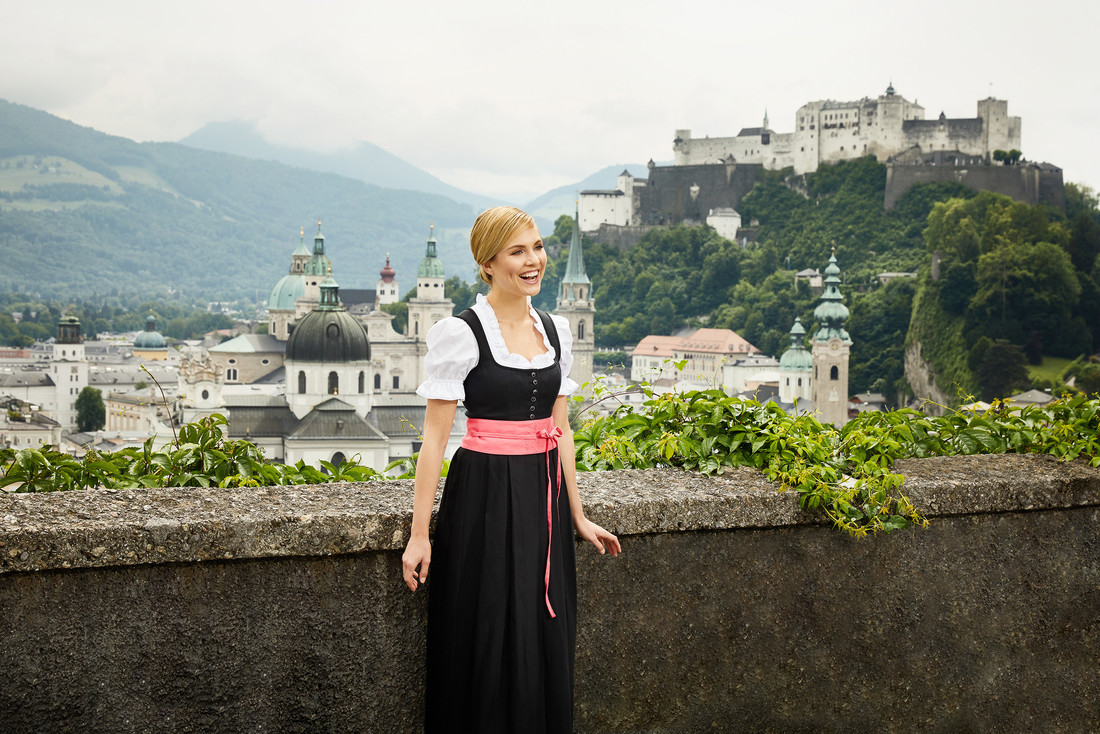
Spectacular views of the Old Town, modern art, historic buildings or relaxing walks surrounded by greenery – the MönchsbergAufzug lift puts all of this within easy reach in a single ride. As one of Salzburg AG Tourismus GmbH’s “Five Treasures,” it whisks visitors from the bustle of the Gstättengasse up to the Mönchsberg in just 30 seconds. From there, a very special journey of discovery begins, one in which past and present blend seamlessly together.

A 19th-century technical sensation

When private banker Karl Leitner opened the first MönchsbergAufzug lift on August 9, 1890 – outfitted with eight seats and room for four standing passengers – it caused quite a sensation. The lift’s spectacular freestanding steel structure actually ran up the outside of the rock face, climbing 60 meters to the Mönchsberg. At the time, this made the MönchsbergAufzug lift one of the tallest electric elevators in Europe. The journey took two minutes – almost unimaginable today. But the lift was far more than a feat of engineering: Leitner wanted to use the new lift to establish the Mönchsberg as an excursion destination while also making it easier for visitors to reach his newly built “Restaurant Elektrischer Aufzug.” Tens of thousands of people took advantage of this new attraction in the heart of Salzburg’s Old Town within the first few months alone.

The water tower along the way

The nearby water tower, which remains a prominent landmark on the Mönchsberg today, also dates from this period. Originally, the tower served as a water reservoir for the planned development of the Mönchsberg and, in Leitner’s vision, was also intended to provide a lookout point for passengers using the lift. It was an early example of combining technology with a memorable visitor experience.

From panoramic lift to Café Winkler

After the Second World War, a new era began for the MönchsbergAufzug lift and the buildings on the mountain. In 1948, the distinctive panoramic lift disappeared from the rock face. As part of the redevelopment, a modern lift with three cabins was built inside the mountain, significantly increasing passenger capacity. Things were changing at the top as well: The original “Restaurant Elektrischer Aufzug” evolved into the Grand Café Winkler, which quickly became one of Salzburg’s most popular excursion restaurants. With its unique views over the Old Town, it was a favorite meeting place for locals and visitors alike. Many combined a walk on the Mönchsberg with coffee and cake or an elegant evening high above the rooftops of the city. For decades, the café played an important role in social life on the Mönchsberg and made the location famous well beyond Salzburg.

An elegant route to the glamorous mountaintop casino

As visitor numbers increased, the facilities were modernized once again in 1987. Around this time, the Mönchsberg also took on a new role in Salzburg’s social scene. Casino Salzburg had moved into the building in 1977, transforming the location into a vibrant center of city life – and the MönchsbergAufzug lift into an elegant way to reach the glamorous casino on the mountain.

Modern transportation to a cultural mecca …

After the Grand Café Winkler closed and was ultimately demolished in the late 1990s, a new chapter finally began both on and inside the mountain. Following extensive renovations to the lower and upper stations, the MönchsbergAufzug lift began operating in its present form in 2003. Just one year later, in 2004, the Museum der Moderne Salzburg opened at the upper station. Today, visitors can step straight from the lift into one of Austria’s most important museums of contemporary art. The former water tower, now known as the Amalie Redlich Tower, has also become part of this cultural ensemble and is used for art education and artist-in-residence projects. One thing has remained unchanged throughout all these decades: the 60-meter ascent. Though the journey time has shrunk – from two minutes back in the day to around 30 seconds now.

… and to nature and the WasserSpiegel Museum.

But the MönchsbergAufzug lift is more than just a lift. And the journey does not simply end at the upper station. Rather, it opens the door to one of Salzburg’s most beautiful recreational areas. Amid mature trees, scenic viewpoints, a stupa and walking trails, visitors can experience the city from an entirely new perspective. Just a few minutes’ walk away is another of Salzburg AG Tourismus GmbH’s “Five Treasures”: the WasserSpiegel. Housed in a historic water reservoir, this interactive water museum tells the story of Salzburg’s public water supply. The museum opens to groups by prior arrangement.

As you can see, for more than 135 years the MönchsbergAufzug lift has done much more than connect two different elevations. In its own unique way, it brings together technology, culture, nature, history and one-of-a-kind views.

You might also like

Stories from Lake Wolfgangsee: history Stories from Lake Wolfgangsee: Summer Getaways, Sensations & Curious Tales Anyone wanting to discover the history – and the tales – of Wolfgangsee is in the best of hands with Augustin Kloiber, the town historian of St. Gilgen. Visitors have to climb to the attic of the village's former schoolhouse to meet him. On the way up, the old wooden floor creaks with every step you take, giving you a clear sense of what it must have sounded like here whenever generations of schoolchildren ran across those same floorboards once the bell rang for recess. New Summit Cross milestones New Summit Cross for the Schafberg After 40 years, the weathered summit cross on the Schafberg has been replaced. With the aid of the SchafbergBahn, the Mondsee chapter of the Austrian Alpine Club safely transported the new landmark to the summit. The result is a new summit cross that will welcome visitors to the Schafberg for many decades to come. When Muscle Power Makes Waves: highlights When Muscle Power Makes Waves: World Record on Lake Wolfgangsee The waters of Lake Wolfgangsee lie calm. The evening sun is reflected upon the water. But then the tension begins to build. Hundreds of eyes are fixed on two boats – members of the WolfgangseeSchifffahrt fleet. Between them: one man, one rope – and a moment that will be remembered. When – on May 13, 2026 – Franz Müllner succeeds in setting the two passenger vessels in motion using nothing but his own muscle power, a murmur runs through the crowd. A few seconds later, it’s clear: the Salzburg strongman has done it – he’s set a new world record! Between Schafberg and Lake Wolfgangsee: people Between Schafberg and Lake Wolfgangsee: Where Dream Jobs are found When Erik Haas drives to work in the morning, it takes him just a few minutes to get there. No traffic. No stress. Instead: mountains, the lake, and a workplace many people marvel at enviously. "They often tell us, 'You have such a great job in such a beautiful spot,'" the captain and locomotive engineer says with a laugh. And they're right. Anyone who works between the Schafberg and Lake Wolfgang gets to experience, every single day, a setting that most people only know from their vacations. Behind the scenes of the FestungsBahn: technology Behind the scenes of the FestungsBahn: The overhaul of a historic funicular Every year, the FestungsBahn funicular carries around 2.3 million passengers up to Hohensalzburg Fortress - arguably Salzburg's best-known tourism attraction – in just under a minute. To ensure that every ride is safe and runs smoothly, a precisely coordinated interplay of technology, experienced personnel, and regular inspections takes place behind the scenes. Gabriel Schmalzl, Operations Manager for the FestungsBahn, offers us insights into an area that remains invisible to most visitors, yet is all the more important, and explains what is involved in the general inspection process.