Navigation überspringen
  • history

Stories from Lake Wolfgangsee: Summer Getaways, Sensations & Curious Tales

Portrait und Reportage mit Augustin Kloiber, Archivleitung des Archiv für Ortsgeschichte St. Gilgen in St. Gilgen am 07.05.2026.

150 Years of Summer Getaways - and Much More...

A conversation with St. Gilgen town historian Augustin Kloiber about summer getaways, pilgrims, and other curious tales from Wolfgangsee

Anyone wanting to discover the history – and the tales – of Lake Wolfgangsee is in the best of hands with Augustin Kloiber, the town historian of St. Gilgen. Visitors have to climb to the attic of the village's former schoolhouse to meet him. On the way up, the old wooden floor creaks with every step you take, giving you a clear sense of what it must have sounded like here whenever generations of schoolchildren ran across those same floorboards once the bell rang for recess.

"Tourism Began with the Pilgrims"

Surrounded by historical books, yellowed photographs, and carefully archived documents, Augustin Kloiber tells stories of bygone times. In doing so, he opens the door not only to 150 years of summer holiday retreats on Lake Wolfgangsee, but also to a history that extends much further back.

"Many people believe tourism in the Salzkammergut began with the era of summer holiday getaways," Kloiber explains. "But Wolfgangsee was, in fact, already an extremely important travel destination during the Middle Ages." As early as the 14th century, thousands of people were making the journey to St. Wolfgang to visit where Saint Wolfgang had lived and worked. "Just imagine," says the passionate amateur historian, "at that time, the villages had perhaps 100 or 120 inhabitants. Then suddenly, during the summer, 80,000 people showed up, all of whom had to be accommodated and provided for."  

At the time, St. Wolfgang was regarded as one of Europe's most important pilgrimage destinations. According to Kloiber, only Rome, Santiago de Compostela, and Aachen drew more pilgrims. Many of them spent weeks, sometimes months, making the arduous journey to St. Wolfgang to visit the places associated with Saint Wolfgang that were also believed to possess miraculous healing powers. "People wanted to see where Saint Wolfgang had sat, where he had preached, or where his axe had fallen to the ground. They wanted water from the Wolfgang Spring on the Falkenstein, where, according to legend, the Bishop of Regensburg struck his staff against the rock to provide fresh water for his thirsty companion."

Over the centuries, an entire pilgrimage culture developed around these stories - including some of the earliest souvenirs. Especially popular were the so-called Wolfgangiflascherl, small bottles filled with crystal-clear water from the Falkenstein, believed to be a curative for eye ailments. "We even have some of these bottles in our archive," says Kloiber. To him, one thing is clear: "That was an early form of tourism, too - it simply had a religious background."

Devils, Pagans, and Saint Wolfgang

Augustin Kloiber's eyes light up whenever he talks about the old legends swirling around the Falkenstein – a place where Christian stories and ancient pagan practices come together. "The Church was very smart," he says with a smile. "It adopted pagan sites and customs, adapted them, and Christianized them."

One of the best-known stories tells of the construction of the church on the Falkenstein and the Devil's Hole, a place that had long been considered special even before the advent of Christianity. According to Christian tradition, Saint Wolfgang wanted to build a church there. The Devil – symbolizing everything pagan – naturally wanted to prevent that from happening. In the end, the two of them struck a bargain: the Devil would help build the church, and in return he would receive the first soul to enter it once it was completed.

"Naturally, the Devil believed that soul would belong to a human being," Kloiber says. So he lugged enormous boulders and helped build the church. When it was finished, he waited eagerly outside for his reward. But Wolfgang outwitted him. Instead of sending a person through the church door first, he sent a wolf. "The Devil, of course, was beside himself with rage," Kloiber says with a laugh. So, according to the legend, the Devil tore the wolf apart before disappearing through a hole in the rock – the so-called Devil's Hole, which still exists today as part of the church on the Falkenstein.

For the town historian, however, the story is more than just a legend. "It symbolizes Christianity's victory over paganism," he explains. Many of the stories surrounding Lake Wolfgangsee originated precisely at the stage where ancient sacred sites, nature worship, and Christian tradition came face-to-face.

“Lake Wolfgang was much more than a holiday destination. It became a summer stage for Vienna’s cultural scene, where artists, writers and musicians met and exchanged ideas.”  - Augustin Kloiber

Summer Getaways: A Stage for the Wealthy

The era of summer holiday getaways actually began much later – as an exclusive pastime for prosperous subjects of the Austro-Hungarian Empire. "The Salzkammergut, and with it the tradition of the summer getaway, became famous because of the Imperial Family," Kloiber explains. Emperor Franz Joseph, in particular, made the region popular. "Everyone who could afford to wanted to go to where the Emperor spent his holidays. Hence, they escaped the summer heat of Vienna and made a beeline for the refreshing Salzkammergut." The greatest refreshment of all was a trip across Lake Wolfgangsee. On May 20, 1873, when the paddle steamer Kaiser Franz Josef I sailed across the lake for the very first time, crowds gathered at the landing stage to celebrate the birth of scheduled passenger service. The first summer timetable from 1873 offered four sailings a day. The boat landings became places to see and be seen, where passengers and spectators gathered in equal numbers.

With the Imperial Family came numerous artists, including the renowned Austrian landscape painter August Schaeffer von Wienwald (1833-1916). Distinguished writers such as Hilde Spiel, Alexander Lernet-Holenia, and Leo Perutz – the so-called "Wolfgang Trio" – as well as Nobel Peace Prize laureate Bertha von Suttner also found inspiration by the lake. Many musicians came as well, delighting visitors with their compositions. Coffeehouses, ballrooms, and spa concerts flourished. "The Viennese simply moved their entire cultural life here during the summer months," Kloiber says. Even famous figures such as Johannes Brahms and the surgeon Theodor Billroth spent their summers on the lake.

The fact that summer retreats were also something of a social showcase is reflected not only in commemorative plaques, street names, and scenic viewpoints. So-called visitors' registers recorded which barons, industrialists, and artists were staying in town at any given time. "It was basically their version of today's social media," Kloiber says with a smile. "People wanted to know: Who's here? Where are they staying? Who might you see while you are out for a stroll?"

Portrait und Reportage mit Augustin Kloiber, Archivleitung des Archiv für Ortsgeschichte St. Gilgen in St. Gilgen am 07.05.2026.
Scenic Views - in Total Comfort

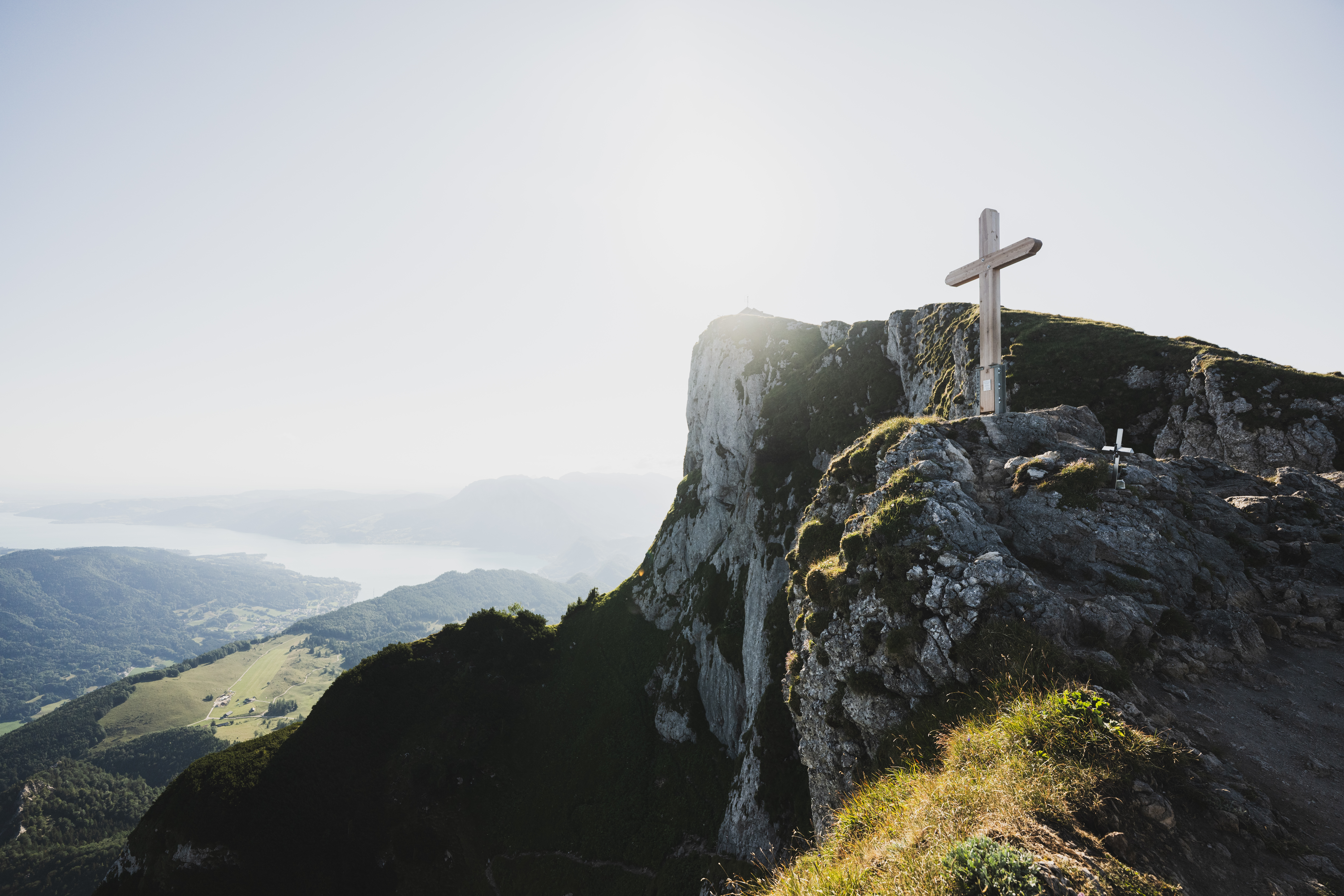
Experiencing nature – but in style – was also part of the summer retreat. Walking trails and scenic lookout points were created, even benches were donated by wealthy summer visitors. "It was a very cultivated way of experiencing nature," Augustin Kloiber explains. Visitors even had themselves carried to the summit of the Schafberg. Young men transported guests to the top in sedan chairs. "There are some wonderful historic drawings of that," says Kloiber. Incidentally, the mountain was not originally called the Schafberg ("Sheep Mountain"), but rather the Schauberg ("Viewing Mountain") – a clear reference to the spectacular panoramic views across this magnificent region of lakes.

And it seems that a little exaggeration has always been part of tourism marketing. Old travel accounts claimed that on a clear day you could even see the tip of the Eiffel Tower from atop the Schafberg. "So fake news existed back then, too," Kloiber says with a laugh.

"The Salzkammergut has always been a place where reality and legend intertwine." - Augustin Kloiber

Portrait und Reportage mit Augustin Kloiber, Archivleitung des Archiv für Ortsgeschichte St. Gilgen in St. Gilgen am 07.05.2026.
"People Want to Hear Stories"

Today, Augustin Kloiber shares these selfsame stories with passengers on special cruises aboard the WolfgangseeSchifffahrt ferries. Why are they so popular? "Because they bring history to life," he says. "People don't just want to hear a list of dates. They want stories." And there are certainly plenty of those associated with Wolfgangsee – curious, moving, and sometimes almost unbelievable. Or, as Kloiber himself puts it: "The Salzkammergut has always been a place where reality and legend have melded together."

Stories from Lake Wolfgangsee

This summer, special cruises aboard the WolfgangseeSchifffahrt offer you the opportunity to experience the history – and the tales – behind 150 Years of summer holiday getaways on Lake Wolfgangsee, recounted live by St. Gilgen town historian Augustin Kloiber. An entertaining, inspiring, and extraordinarily varied journey of discovery. (Verlinkung)

You might also like

Between Schafberg and Lake Wolfgangsee: people Between Schafberg and Lake Wolfgangsee: Where Dream Jobs are found When Erik Haas drives to work in the morning, it takes him just a few minutes to get there. No traffic. No stress. Instead: mountains, the lake, and a workplace many people marvel at enviously. "They often tell us, 'You have such a great job in such a beautiful spot,'" the captain and locomotive engineer says with a laugh. And they're right. Anyone who works between the Schafberg and Lake Wolfgang gets to experience, every single day, a setting that most people only know from their vacations. New Summit Cross milestones New Summit Cross for the Schafberg After 40 years, the weathered summit cross on the Schafberg has been replaced. With the aid of the SchafbergBahn, the Mondsee chapter of the Austrian Alpine Club safely transported the new landmark to the summit. The result is a new summit cross that will welcome visitors to the Schafberg for many decades to come. When Muscle Power Makes Waves: highlights When Muscle Power Makes Waves: World Record on Lake Wolfgangsee The waters of Lake Wolfgangsee lie calm. The evening sun is reflected upon the water. But then the tension begins to build. Hundreds of eyes are fixed on two boats – members of the WolfgangseeSchifffahrt fleet. Between them: one man, one rope – and a moment that will be remembered. When – on May 13, 2026 – Franz Müllner succeeds in setting the two passenger vessels in motion using nothing but his own muscle power, a murmur runs through the crowd. A few seconds later, it’s clear: the Salzburg strongman has done it – he’s set a new world record! Behind the scenes of the FestungsBahn: technology Behind the scenes of the FestungsBahn: The overhaul of a historic funicular Every year, the FestungsBahn funicular carries around 2.3 million passengers up to Hohensalzburg Fortress - arguably Salzburg's best-known tourism attraction – in just under a minute. To ensure that every ride is safe and runs smoothly, a precisely coordinated interplay of technology, experienced personnel, and regular inspections takes place behind the scenes. Gabriel Schmalzl, Operations Manager for the FestungsBahn, offers us insights into an area that remains invisible to most visitors, yet is all the more important, and explains what is involved in the general inspection process.